Thermage CPT

All you need to know about Thermage treatment.

Thermage is the pioneer of non-invasive skin tightening. It’s unique technology of monopolar capacitively coupled radiofrequency (RF) enables volumetric heating much deeper than lasers. It can penetrate the dermis and into subcutaneous tissues to firm up existing collagen and stimulate new growth. In addition to tightening, this deep penetration helps to slim down the silhouette, especially flab-prone areas like double chin, cheeks, tummy and arms. The top-down heating profile also addresses superficial skin problems like wrinkles and pores, improving skin texture. Unlike lasers, the superior heating technology of Thermage makes it a one-time procedure, lasting an amazing 2-3 years!

These days, there are so many skin tightening devices in the industry. I have tried many variants of bipolar radiofrequency, cavitation, infrared light… but none safely delivers the levels of energy as Thermage can. Clinical studies show up to 4 times more therapeutic heating by Thermage, compared to current technologies! In other words, Thermage still produces the most dramatic and lasting results.

The Thermage Journey

Since its launch in 1995, Thermage has withstood the test of time. Technology so often burns brightly, transiently, and then gets replaced by the next new upstart. (Just look at how I have to change a new iphone almost every year!) So what makes Thermage different?

Thermage is backed by strong research and development, continuously improving its safety and effectiveness. To be perfectly honest, I was never a huge fan of Thermage until the latest generation Thermage CPT (Comfort Pulse Technology) came along. This new platform incorporates vibration with cryogen bursts and pulses of RF, making it so much more comfortable. The tip design and software has also been upgraded to deliver more uniform heating. The new larger body tip contours almost anywhere in the body faster. All this translates into much better results, more uniform tightening, with virtually painless treatments.

Which Is Better? Thermage CPT Or Ulthera?

I get asked this very often. While both are giants in the industry, they work in different ways. Thermage treats the skin from top down using radiofrequency waves; while Ulthera rejuvenates the skin from inside out with focused ultrasound energy. Thermage CPT treats all the problems in the skin – texture, wrinkles, firmness; while Ulthera tightens even deeper layers like the SMAS to give a lift against gravity. As a matter of fact, the 2 treatments work synergistically. So do both (budget-allowing), for a 3-dimensional non-invasive facelift. At different times of course.

Thermage CPT is safe to perform alongside other energy-based devices like IPL and lasers, once the skin has settled. B*tox and Fillers are especially useful to further smoothen wrinkles and re-volumize hollowed areas, thus creating a more enhanced facelift.

When Should I Do This?

I often tell my patients not to wait until your skin has gone south before you start treatments. Anti-ageing procedures are best done preemptively, before skin loses all its collagen. That way, your youthfulness will be maintained. Once the skin sags and loses elasticity, it will be much more challenging to restore it to its former glory.

For more information on skin tightening and face lifting, contact Dr Phoon – phoonys@davidloh.sg or call us at +65 67339114

Dr Phoon and The Thermage CPT
Thermage CPT

Nuyou Jan 2014


Read More
liposuction

Liposuction is about a Sense of Proportion

Dr David Loh on Liposuction

This is a transcript of an interview with Dr David Loh on Liposuction.

What do you see when you look in a full-length mirror? Almost all of us have it: that one despised fatty area that inexorably draws your eye and annoys the perfectionist in you. Most often the belly, the buttocks or the thighs, it could also be hamster cheeks, a double chin, a fatty chest, flabby underarms – anywhere, really, all the way down to the ankles.

Liposuction is one of the most popular aesthetic surgical procedures for a very good reason, says Dr David Loh. It allows both men and women to achieve, through a minor surgical procedure, a more svelte, proportional and beautiful figure and also, in the process, regain their confidence.

Liposuction is not a treatment for obesity,” he warns. “Only with diet and exercise can one lose weight. If someone eats more calories than they expend after liposuction, over time the body will store those fat cells, albeit in a different location than where the liposuction was done.”

Liposuction is excellent for addressing areas of disproportion, he says. That does not mean the patient has to be thin; it only means that there needs to be an area that is disproportionate, such as a bulge that does not flow harmoniously with the surrounding areas.

Though Dr Loh also performs various non-surgical methods of body contouring, he feels that liposuction remains a gold standard for permanent fat removal. And for areas where non-surgical sculpting methods are awkward, it’s the only way.


Dr David Loh is one of the pioneers of office based liposuction in Singapore since 2007. MOH accredited to perform liposuction in the clinic and in Day Surgery OT, Dr David Loh is the first Chairman of the Liposuction Peer Review Committee of The Society of Aesthetic Medicine in Singapore. His Wheelock Place clinic is one of a few aesthetic clinics in Singapore that is accredited for small area office based liposuction. He also performs fat transfers to the face, buttocks and breasts


Read more about Why Liposuction is not a means to Weight Reduction and also about Vaser Liposelection

Read More
correcting fat transfers

Smartlipo to the Rescue. Correcting Over-done Fat Transfers

DID YOU KNOW THAT OVERDONE FAT-TRANSFERS CAN BE CORRECTED?

While Fat Transfer (aka Fat Grafting or Lipofilling) on the face is a relatively easy task for doctors with the setup for office-based liposuction, getting it just right is not always a given. There are many variables like the quality of the fat after liposuction; the quality of the skin on the face which will determine the blood supply available to support the fat;  the age of the patient; whether a smoker or not …and so forth.

I have been doing fat transfers since 2007 and I have had more than a few requests in the past to treat the overfilled foreheads, chins, and overfilled cheeks. Some were my patients, but mostly were done overseas – mainly in the country that is now very popular for cosmetic surgery. Not that their doctors are bad, I guess it must be too inconvenient to fly there to do corrections, hence they land up for corrections with me. The pros and cons of medical tourism for invasive procedures is of course a topic for another blog altogether in itself.

Our Smartlipo system is just ideal for this purpose. The technology started me on the road to liposuction in 2006, and now although I have moved on to more efficient and effective systems to do liposuction, I still fall back on Smartlipo to do small and delicate areas. Smartlipo gives me accuracy and precision to treat small areas like overfilled foreheads, cheeks and chins.

The fibre-optic system delivers pulses of laser to melt away excess fat. In doing so, I can partially or fully remove the overfilled areas. It’s almost like the “Eraser” for Fat Fillers.

Dr David Loh

Read more about fat grafting (fat transfers) to the face


Read More
fat_transfer_breast_enhancement

Fat Transfer to the Breasts

fat_transferFat Transfer

Fat-transfer (also known as Fat grafting or Liposfilling) is used as an alternative to implants to enhance the size of the the breasts. Moving unwanted fats from another area to the breasts makes logical sense. After all, the breast is mainly fat and glandular tissue.

This “Fat transfer to the Breasts” procedure involves harvesting fat from another area, cleaning and filtering the fat cells and re-grafting it back to the breasts. Which makes it a liposuction-type surgical procedure. This done in a Day Surgery OT under sedation by an anaesthetist.

The recovery is not unlike that of a typical liposuction procedure. Some soreness at both the donor site and the breasts is to be expected for a couple of days after the procedure. Most patients can go about activities the very next day, just a bit slower because of the soreness. There is no real need for bed rest.

Moving the fat from one place to another is really an autologous “tissue transplant” procedure. It’s success hinges on many factors which includes:

1) The handling of the fat – the gentler the fat cells are handled throughout, the better the survival rate. This in turn depends on the method of liposuction (Vaser, Microaire, Waterjet etc), the cleaning process (eg. Revolve by Allergan), or the micronization process (eg Tulip). Micronization is important because fat cells beyond a certain diameter tends not to survive in the new environment. Oxygen needs to diffuse into the cell in lieu of blood supply being established.

2) The amount transferred – this is really a situation where less is more. In the past when doctors injected large amounts of fat back into the breasts, most of the transplanted fat cells die off. The incidence of oil cysts correlates with larger volume transfers. After all, the blood supply to the area will only be enough support a certain amount of grafted fat. From experience we know that about 150mls on each side is optimum for a girl of average body frame. By re-injecting around 150mls on each side, we can optimise graft survival rates and minimise the formation of oil cysts.

Some of the grafted fat will resorb over about a 1-month period. About 100-120mls remaining for the long term, this translates to about 1 cup size up in an average size girl. This transplanted fat will behave like the fat from the donor site, be it the thighs or the abdomen. It will expand when the patient puts on weight and shrink during periods of severe weight loss. So good results also hinges on the patient not losing too much weight suddenly.

nanofat_grafting
Minimally manipulated micronized fat cells using the Tulip system


Methods and techniques have improved over the years. Results are now more predictable and long lasting.

Who benefits most? If co-incidentally you are thinking of having a liposuction and would not mind a mild 1 cup size boost, then fat transfer to the breasts would be the obvious alternative to a silicone breast implant. You get to “recycle” your fat.

Who wouldn’t benefit? If you are expecting 2-3 cup size increases, you will be a bit disappointed. You would be better off going for implants.

Who cannot do this procedure? Very thin individuals with hardly any fat.


David Loh Surgery is an aesthetic clinic in Singapore that is MOH accredited to perform office based liposuction. Dr David Loh also operates at Novena Day Surgery. Dr David Loh performs liposuction using VASER and has been high definition Vaser Liposelection accredited since 2008. He performs fat transfer to the breasts in Novena Day Surgery. Fat grafting (or fat transfer) to the face can be done in the clinic under local anaesthetic.


Read More
ultimate_guide_to_vaser_liposuction

Ultimate Guide to Vaser Liposuction

[vc_row][vc_column][vc_column_text]

Vaser Liposuction is also known as Vaser-assisted liposuction, or Vaser Liposelection.

[nz_dropcap type=”empty full” color=””]V[/nz_dropcap]aser is a liposuction procedure that uses high-frequency sound waves (ultrasound) to break up fat deposits before the fats are physically sucked out. This loosens up the fat pockets, which in turn reduces the effort to extract the fat cells. So what we can achieve with Vaser Liposuction is an effective liposuction (ie. large areas can be treated with less surgeon exhaustion), potentially less skin unevenness, and with generally less trauma.

[nz_gap height=”25″ /]

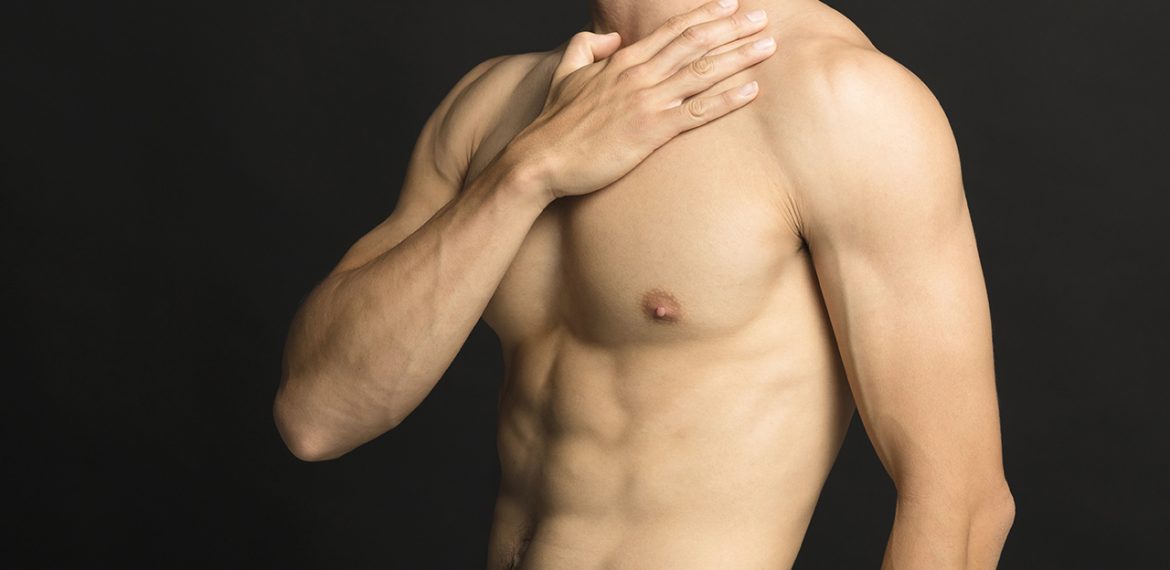
It is worth noting here that the best liposuction results depend on the the skill and experience of surgeon, and not so much on “what tools he uses”. Vaser Liposuction, Vaser HD or even other techniques of liposuction are not a weight reduction tools. Liposuction is a body-sculpting and contouring treatment that is best suited for small areas of disproportion like the saddle bags, the abdomen and love-handles or the breasts in men.

[nz_gap height=”25″ /]

[nz_gap height=”25″ /]

The Steps in a Vaser Liposuction Procedure
[nz_gap height=”25″ /]

  1. The first step during Vaser Liposuction is tumescent anaesthesia. This anaesthetic solution is infused into the fat layer just under the skin to “distend” it. The distended fat layer makes it easier to move the suction cannula through it. It also reduces bleeding and provides greater comfort after the whole liposuction procedure.[nz_gap height=”25″ /]
  2. The next step involves the use of an ultrasonic probe which is inserted into the fat layer to loosen up the fat. This step is particularly useful in areas where the fat is dense (tough) or if there is a lot of adhesions from previous liposuction or even with Paroxysmal Adipose Hyperplasia (PAH) following Coolsculpting.[nz_gap height=”25″ /]
  3. Then the suction. The end point of “suction” in any liposuction is deemed to have been reached when the curves flow smoothly and harmoniously. In Vaser HD (high-def Vaser), special cannulas are used to sculpt muscle shapes out of fat deposits.[nz_gap height=”25″ /]
  4. The recovery time depends on the extent of the areas treated. For the thighs, most of our vaser liposuction patients are up and about the next day. Bed rest is not necessary, but their movements might be a little slower because of the soreness. They might even be back in the gym the following week.[nz_gap height=”25″ /]

Where is Vaser Liposuction done?

[nz_gap height=”25″ /]

The Vaser liposuction procedure is performed in a Day Surgery OT with and anaesthetist. The amount that can be treated in a session really actually depends on the safe amounts of tumescent anaesthesia that can be injected in a session. And this is calculated based on the weight of the person.

What is Vaser HD?

[nz_gap height=”25″ /]

Vaser HD means we sculpt the patient’s layer of fat into muscle shapes. Or else we can also suck nearer to the skin so that the muscle shapes beneath are revealed.


[/vc_column_text][vc_single_image image=”7223″ img_size=”full” add_caption=”yes”][/vc_column][/vc_row]

Read More
  • 1
  • 2