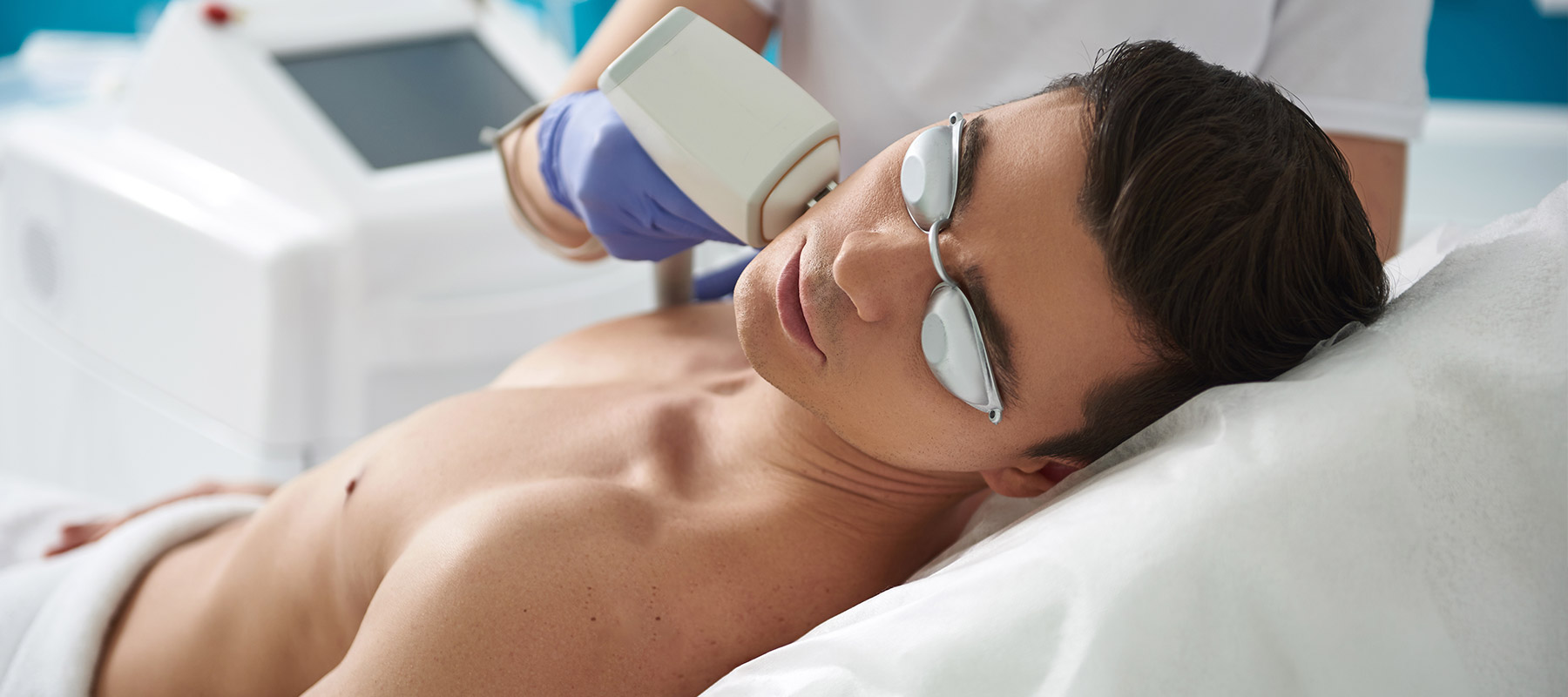
Fractional Laser Treatment

5 Popular Aesthetic Treatments among Men in Singapore

The kinds of aesthetic treatments that men have done on themselves are not very different from the ladies.

The main difference being that men prefer those treatments with almost no recovery time.  Treatments like Skin Tightening Treatments, B*tox and Dermal fillers. What gave rise to the era of male aesthetics was really the invention of aesthetic treatments that involved so called “no downtime”.
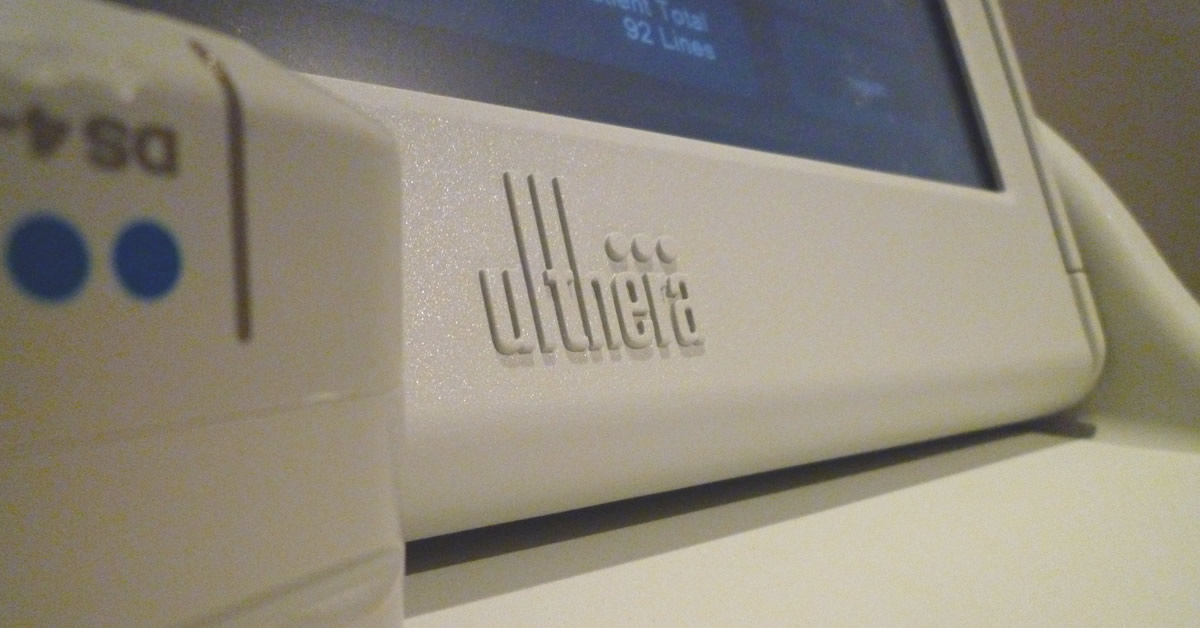
ultherapy_machine


What really broke down the barrier to men fully embracing aesthetic treatments were the skin tightening treatments that started becoming popular around 2009-2010. Treatments like Ultherapy and Thermage mean “no-downtime”, and totally non-invasive skin tightening treatments. This went down very well with men.

In the past, cosmetic surgery used to be associated with bruises and bandages; extended healing time and exaggerated features post-surgery. Men absolutely hate having such procedures done. For one they cannot apply makeup to conceal any bruises, and secondly men hate taking time off work for such vanity-associated reasons.

With the newer methods and technologies, doctors are now getting reasonably good results with no recovery time at all. Hence more men are keener to do such procedures. Not only are they keener to do such procedures, they are also more keen to talk about their experiences with they spouses or their male buddies. This really re-defines aesthetic treatments for men, aka males aesthetics.

In fact, we have found that the “power of control” over one’s appearance that aesthetic treatments offer, goes down very well with the highly-driven male-corporate climbers’ psyche. Looking sharp is as much a prized commodity as being sharp-witted and sharp-minded.

You have to to admit it. Not only do they embrace aesthetic treatments, they will often travel the world looking for the latest technologies and the most skillful doctors.

And these highly driven, very successful individuals, usually have no qualms talking about “having work done” so long as the aesthetic treatments do not leave them with any recovery time. And as long as they do not have to put on makeup to conceal bruises, they would be most happy to share their experience about how they keep young and competitive.

That is in essence what male aesthetics has become – the “power of control” in our ever changing and highly competitive world.

Read more on the top 5 most popular aesthetic treatments among men. Ultherapy, Thermage, B*tox, Fillers, Skin Tightening Treatments,

Read more about Ultherapy vs Thermage vs Threadlifts

Read More

Qualms no more about Cosmetic Surgery

If aesthetic treatments and cosmetic surgery are still taboo, it is because of the stereotypes still perpetuating in popular media. These stereotypes tend to portray aesthetic treatment or cosmetic surgery patients as being vain or narcissistic, or that they cannot reconcile with their bodies (a condition called body dysmorphia syndrome). And that cannot be further than the truth!

The vast majority of patients who come forward for aesthetic treatments and cosmetic surgery are actually highly motivated and very driven individuals. Their underlying motivation is about taking control over their appearance and hence their destiny. Whether it is to find a life partner or to look sharp for job and business prospects, aesthetic treatments and cosmetic surgeries give them a sense of empowerment over their own destiny. It is this sense of empowerment that defines the modern day patient for aesthetic treatments.

Modern day aesthetic treatments with little or no downtime fits fits right into this whole frame of mind. Where the individual takes control over his or her destiny, appearance and competitiveness.

And very often, they are so empowered they will travel the world to seek out the best treatments and best practitioners.

And these individuals usually have no qualms about admitting to having work done. So there you have it, the modern day aesthetic and cosmetic surgery patient.

Read More

Ultherapy V-Lift

[vc_row][vc_column][vc_column_text]The Ultherapy V-Lift is a non-invasive, non-surgical method to reduce the width of the lower and face. It sculpts the face while giving it a mild facelift-type effect.

Ultherapy is FDA approved since 2009 to lift a sagging face. It does this by tightening not only the skin, but the layers under the skin which we call the SMAS. This is a tough layer comprising muscles and the fibrous tissue. This is a strong supporting layer for the face.

Sound waves are focused by Ultherapy to leave tiny shockwaves under the skin and into the SMAS. Each point of these shockwaves triggers a cascade of collagen regeneration that translates into firmer and tighter skin. The results progressively improve over a period of several months.

What most patients experience is a mild facelift type effect that gets better as the months go by. All just after one treatment of Ultherapy.

It’s safety profile is unparalleled. In over a thousand cases done at David Loh Surgery since 2009, no one has suffered any form of injury from Ultherapy. Which sometimes happens with most other RF, IPL or laser treatments. The worst that can happen with Ultherapy is a mild mosquito-bite looking type of reaction in the skin, we call wheals. These will typically settle within a few days.

Ultherapy works particularly well in the lower face and under the chin. If fired deliberately into the fat fads in the jowl areas and under the chin, it can reduce these fat pads ever so slightly. Which is great because we can achieve a gentle sculpting of the face. These effects on the lower face we have term as The Ultherapy V-Lift.

The Ultherapy V-Lift is available at David Loh Surgery at both Novena Medical Centre and Wheelock Place. Our clinic is one of the first to start using Ulthera in 2009.

[/vc_column_text][vc_single_image image=”4424″ img_size=”full” add_caption=”yes”][vc_column_text]Read more:

Ultherapy, Facial Sculpting using Ulthera, Ultherapy page in Chinese, Ultherapy in Russian, Thread Lifts vs Ulthera[/vc_column_text][/vc_column][/vc_row]

Read More
Ulthera for facial sculpting

3-in-1 Facial Sculpting – Ultherapy, Voluma and B*tox

Dr David Loh achieves a natural and non-invasive facial sculpting by combining Ultherapy with Voluma and B*tox.

[nz_gap height=”25″ /]

Younger patients are coming forward more frequently these days to sculpt their faces non-invasively with Ultherapy.

Dr David Loh was one of the first to operate the FDA approved skin-tightening treatment in Singapore. He first noted that Ultherapy can shrink chubby faces if the energy was concentrated over the cheek fat pads. Hence he started offering younger patients who have round or chubby faces Ultherapy to make them look more sculpted. The word went round and Ultherapy V-Lift is now as popular with younger patients looking to sculpt and contour their faces as with older patients looking to tighten skin and lift their sagging faces.

Ultherapy employs highly researched micro-focused ultrasound. By focusing the ultrasound waves, it can create spots of energy under the skin specific depths. Each of these spots stimulates collagen regeneration. Collectively, several thousand of these spots cause a mild face lift like effect.

Using the deepest setting on the jowl fat pads, we can gently tightening up the connective tissue around the fat pad. This give rise to a mild facial sculpting effect. In the process, a tiny amount of fat cells get lysed. So we can achieve a slimming effect on the face.

Additional ways to slim the face includes B*tox into the masseter muscles and fillers for chin augmentation. 

Read more about Ulthera, or the treatment called Ultherapy

Read More
Ulthera

Clinical Paper on Ultherapy – 86% had a measurable eyebrow lifting of about 2mm

Ultrasound tightening of facial and neck skin: A rater-blinded prospective cohort study

Murad Alam, MD, MSCI, Lucile E. White, MD, Nicolle Martin, MD, Joslyn Witherspoon, MD, MPH, Simon Yoo, MD, and Dennis P. West, PhDa Chicago, Illinois

Background: Nonablative skin tightening technologies offer the prospect of reduction of wrinkles and skin sagging with minimal downtime, discomfort, and risk of adverse events. The excellent safety profile is mitigated by the limited efficacy of such procedures.

Objective: We sought to assess the efficacy of ultrasound skin tightening for brow-lift in the context of a procedure treating the full face and neck.

Methods: This was a rater-blinded, prospective cohort study at a dermatology clinic in an urban academic medical center. Subjects were medicated with topical anesthetic and then treated with an investigational focused intense ultrasound tightening device to the forehead, temples, cheeks, submental region, and side of neck using the following probes: 4 MHz, 4.5-mm focal depth; 7 MHz, 4.5-mm focal depth; and 7 MHz, 3.0-mm focal depth. Standardized photographs of front and side views were obtained at 2, 7, 28, 60, and 90 days; rating scales of pain, adverse events, physical findings, and patient satisfaction were also completed. Primary outcome measure was detection of improvement in paired comparison of pretreatment and posttreatment (day 90) photographs by 3 masked expert physician assessors, cosmetic and laser dermatologists, and plastic surgeons who were not authors. Second primary outcome measure was objective brow elevation as quantitated by a standard procedure using fixed landmarks. Secondary outcomes measure was patient satisfaction as measured by a questionnaire.

Results: A total of 36 subjects (34 female) were enrolled, one subject dropped out, and 35 subjects were evaluated. Median age was 44 years (range 32-62). On the first primary outcome measure, 30 of 35 subjects (86%) were judged by the 3 masked experienced clinician raters to show clinically significant brow-lift 90 days after treatment (P = .00001). On the second primary outcome measure, mean value of average change in eyebrow height as assessed by measurement of photographs at 90 days was 1.7 mm.

Limitations: Limitations of this study include the inability to quantitatively measure lower face tightening because of the lack of fixed anatomic landmarks in this area.

Conclusion: Ultrasound appears to be a safe and effective modality for facial skin tightening. A single ultrasound treatment of the forehead produced on average brow height elevation of slightly less than 2 mm. Most treated individuals responded, commonly with accompanying transitory mild erythema and edema.

( J Am Acad Dermatol 2010;62:262-9.)
 
Dr David Loh and his Ultherapy machine
( J Am Acad Dermatol 2010;62:262-9.)
Read More
preventive antiaging

Preventive Anti-aging

1. What is preventive anti-aging?

This is a whole new concept where we approach the problem of aging way before aging sets in. Look at your mum and you will know how you will age. Why wait till then to seek treatment? It is easier to do treatments to maintain your skin now then treat the problems later.

2. At what age does skin start to age?

Your skin actually starts to age immediately after puberty. However, even though your collagen is lessened, it is still able to heal itself quickly. This starts to slow down in the late 30s and 40s where actual signs of aging like sagging and wrinkles appear.

Your lifestyle also plays a big part in your aging process, so if you smoke and sun tan a lot, your skin’s aging will be accelerated.

3. Do genes play a big part in how we will age?

It does. Genetics determine your skin’s healing process. Certain races age better like Asians and African-Americans compared to Caucasians. Your face structure is also important when it comes to aging well. For example, certain features like thick lips can make a person look youthful.

4. I’m only in my 20s, do I need to do any anti aging treatments? Why?

You need to be aware of what environmental damage can do to your skin and start using skin care that protects. Maintanence is better than cure so you can start doing gentle laser and IPL treatments to regenerate collagen and keep your skin in good condition.

5. Will doing these treatments early make my skin more resistant to them as I get older?

No, in fact, it’s been scientifically proven that fillers actually stimulate collagen and improve skin tone. If you test skin before and six months after it’s had filler injections, you will see that the new skin has more collagen.

These treatments actually improve your skin’s baseline and takes it to a higher level so that you age slower.

6. What are some treatments to do for skin maintenance?

You can start with fillers to improve collagen and IPL to take away freckles, reduce acne and acne marks.

7. How do these treatments compare to anti aging creams?

Unlike the treatments above, creams can only go so far. Our skin is an excellent barrier against dust, oils, etc. That’s why sonophoresis machines have been used to drive the molecules of creams into our skin in some beauty treatments. Creams have to be designed very well to be able to deliver nutrients on its own.

Creams have their own place of course – it is comforting to use them when your skin feels dry. It just has to be formulated very well to be able to deliver its benefits.

8. In your experience, what is the best anti aging treatment available and why?

So far, Ulthera has been the most revolutionary as it is able to look into the many layers of skin and deliver the precise dosage without harming the epidermis. Patients are able to get a firmer and tighter face just from one treatment!

9. What other benefits does Ulthera have?

It stimulates collagen, reduces lines and gives you an overall radiant look.

10. Can we delay our skin from aging and how?

Realistically, we can’t delay our skin from aging but we can hold back the signs of aging that chronological age will show. In the last 20 years, there have been a lot of advances in technology like non-ablative lasers, Thermage, Titan and Ulthera – many affordable treatments that have been scientifically proven to deliver results. So, you can delay the signs of aging even though you can’t delay aging itself!

Read More