Upper Face Fillers

We all know about fillers into lines like the nasolabial folds. And we all know about fillers in the cheeks, the chin and the nose. Fillers were seldom employed in the upper third of the face in the forehead, eyebrow and temple area. At the 1st Malaysian-Singapore Conference of Aesthetic Medicine held in KL on 15 July 2012, Dr David Loh demonstrated the advanced techniques of upper face fillers and brow injections produce a stronger forehead. This is particularly useful for those with eyes that protrude producing a groove in the upper eyelids. It is also useful for Asians men with very flat foreheads to get stronger (hooded brow) features. Or even Asian girls who want to make their features a little more Caucasian-like (less flat). Upper Face Fillers is an advanced technique which should only be attempted by experienced injectors.

NB: Dr David Loh is not a fan of using fillers to fill lines. He feels that injecting fillers in the skin (in the dermis) can sometimes leave lumpiness obvious under certain lighting. No matter how refined the fillers are and how experienced the injector is. Besides a lot of these lines like the crow’s feet and the glabellar frown lines are better off treated with B*tox. Dr David Loh advocates using fillers to sculpt the face and to soften features by altering volume and providing supports for the skin so that it does not sag.


Dr David Loh started his aesthetic clinic in 2002 when the field Aesthetic Medicine was still in its infancy. He is now a well known international trainer for advanced B*tox and Filler techniques. He is on the faculty of the Allergan Academy and is the President of The Society of Aesthetic Medicine.


Read More
Ulthera for facial sculpting

3-in-1 Facial Sculpting – Ultherapy, Voluma and B*tox

Dr David Loh achieves a natural and non-invasive facial sculpting by combining Ultherapy with Voluma and B*tox.

[nz_gap height=”25″ /]

Younger patients are coming forward more frequently these days to sculpt their faces non-invasively with Ultherapy.

Dr David Loh was one of the first to operate the FDA approved skin-tightening treatment in Singapore. He first noted that Ultherapy can shrink chubby faces if the energy was concentrated over the cheek fat pads. Hence he started offering younger patients who have round or chubby faces Ultherapy to make them look more sculpted. The word went round and Ultherapy V-Lift is now as popular with younger patients looking to sculpt and contour their faces as with older patients looking to tighten skin and lift their sagging faces.

Ultherapy employs highly researched micro-focused ultrasound. By focusing the ultrasound waves, it can create spots of energy under the skin specific depths. Each of these spots stimulates collagen regeneration. Collectively, several thousand of these spots cause a mild face lift like effect.

Using the deepest setting on the jowl fat pads, we can gently tightening up the connective tissue around the fat pad. This give rise to a mild facial sculpting effect. In the process, a tiny amount of fat cells get lysed. So we can achieve a slimming effect on the face.

Additional ways to slim the face includes B*tox into the masseter muscles and fillers for chin augmentation. 

Read more about Ulthera, or the treatment called Ultherapy

Read More
fat_transfer_breast_enhancement

Fat Transfer to the Breasts

fat_transferFat Transfer

Fat-transfer (also known as Fat grafting or Liposfilling) is used as an alternative to implants to enhance the size of the the breasts. Moving unwanted fats from another area to the breasts makes logical sense. After all, the breast is mainly fat and glandular tissue.

This “Fat transfer to the Breasts” procedure involves harvesting fat from another area, cleaning and filtering the fat cells and re-grafting it back to the breasts. Which makes it a liposuction-type surgical procedure. This done in a Day Surgery OT under sedation by an anaesthetist.

The recovery is not unlike that of a typical liposuction procedure. Some soreness at both the donor site and the breasts is to be expected for a couple of days after the procedure. Most patients can go about activities the very next day, just a bit slower because of the soreness. There is no real need for bed rest.

Moving the fat from one place to another is really an autologous “tissue transplant” procedure. It’s success hinges on many factors which includes:

1) The handling of the fat – the gentler the fat cells are handled throughout, the better the survival rate. This in turn depends on the method of liposuction (Vaser, Microaire, Waterjet etc), the cleaning process (eg. Revolve by Allergan), or the micronization process (eg Tulip). Micronization is important because fat cells beyond a certain diameter tends not to survive in the new environment. Oxygen needs to diffuse into the cell in lieu of blood supply being established.

2) The amount transferred – this is really a situation where less is more. In the past when doctors injected large amounts of fat back into the breasts, most of the transplanted fat cells die off. The incidence of oil cysts correlates with larger volume transfers. After all, the blood supply to the area will only be enough support a certain amount of grafted fat. From experience we know that about 150mls on each side is optimum for a girl of average body frame. By re-injecting around 150mls on each side, we can optimise graft survival rates and minimise the formation of oil cysts.

Some of the grafted fat will resorb over about a 1-month period. About 100-120mls remaining for the long term, this translates to about 1 cup size up in an average size girl. This transplanted fat will behave like the fat from the donor site, be it the thighs or the abdomen. It will expand when the patient puts on weight and shrink during periods of severe weight loss. So good results also hinges on the patient not losing too much weight suddenly.
nanofat_grafting
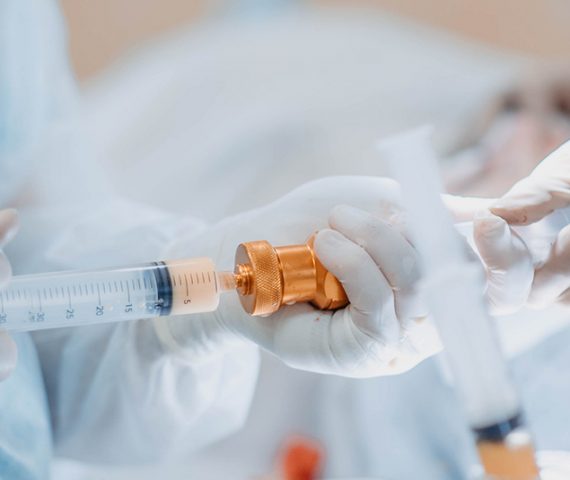
Minimally manipulated micronized fat cells using the Tulip system


Methods and techniques have improved over the years. Results are now more predictable and long lasting.

Who benefits most? If co-incidentally you are thinking of having a liposuction and would not mind a mild 1 cup size boost, then fat transfer to the breasts would be the obvious alternative to a silicone breast implant. You get to “recycle” your fat.

Who wouldn’t benefit? If you are expecting 2-3 cup size increases, you will be a bit disappointed. You would be better off going for implants.

Who cannot do this procedure? Very thin individuals with hardly any fat.


David Loh Surgery is an aesthetic clinic in Singapore that is MOH accredited to perform office based liposuction. Dr David Loh also operates at Novena Day Surgery. Dr David Loh performs liposuction using VASER and has been high definition Vaser Liposelection accredited since 2008. He performs fat transfer to the breasts in Novena Day Surgery. Fat grafting (or fat transfer) to the face can be done in the clinic under local anaesthetic.

 

Read More
ultimate_guide_to_vaser_liposuction

Ultimate Guide to Vaser Liposuction

[vc_row][vc_column][vc_column_text]

Vaser Liposuction is also known as Vaser-assisted liposuction, or Vaser Liposelection.

[nz_dropcap type=”empty full” color=””]V[/nz_dropcap]aser is a liposuction procedure that uses high-frequency sound waves (ultrasound) to break up fat deposits before the fats are physically sucked out. This loosens up the fat pockets, which in turn reduces the effort to extract the fat cells. So what we can achieve with Vaser Liposuction is an effective liposuction (ie. large areas can be treated with less surgeon exhaustion), potentially less skin unevenness, and with generally less trauma.

[nz_gap height=”25″ /]

It is worth noting here that the best liposuction results depend on the the skill and experience of surgeon, and not so much on “what tools he uses”. Vaser Liposuction, Vaser HD or even other techniques of liposuction are not a weight reduction tools. Liposuction is a body-sculpting and contouring treatment that is best suited for small areas of disproportion like the saddle bags, the abdomen and love-handles or the breasts in men.

[nz_gap height=”25″ /]

[nz_gap height=”25″ /]

The Steps in a Vaser Liposuction Procedure
[nz_gap height=”25″ /]

  1. The first step during Vaser Liposuction is tumescent anaesthesia. This anaesthetic solution is infused into the fat layer just under the skin to “distend” it. The distended fat layer makes it easier to move the suction cannula through it. It also reduces bleeding and provides greater comfort after the whole liposuction procedure.[nz_gap height=”25″ /]
  2. The next step involves the use of an ultrasonic probe which is inserted into the fat layer to loosen up the fat. This step is particularly useful in areas where the fat is dense (tough) or if there is a lot of adhesions from previous liposuction or even with Paroxysmal Adipose Hyperplasia (PAH) following Coolsculpting.[nz_gap height=”25″ /]
  3. Then the suction. The end point of “suction” in any liposuction is deemed to have been reached when the curves flow smoothly and harmoniously. In Vaser HD (high-def Vaser), special cannulas are used to sculpt muscle shapes out of fat deposits.[nz_gap height=”25″ /]
  4. The recovery time depends on the extent of the areas treated. For the thighs, most of our vaser liposuction patients are up and about the next day. Bed rest is not necessary, but their movements might be a little slower because of the soreness. They might even be back in the gym the following week.[nz_gap height=”25″ /]

Where is Vaser Liposuction done?

[nz_gap height=”25″ /]

The Vaser liposuction procedure is performed in a Day Surgery OT with and anaesthetist. The amount that can be treated in a session really actually depends on the safe amounts of tumescent anaesthesia that can be injected in a session. And this is calculated based on the weight of the person.

What is Vaser HD?

[nz_gap height=”25″ /]

Vaser HD means we sculpt the patient’s layer of fat into muscle shapes. Or else we can also suck nearer to the skin so that the muscle shapes beneath are revealed.


[/vc_column_text][vc_single_image image=”7223″ img_size=”full” add_caption=”yes”][/vc_column][/vc_row]

Read More
Ulthera

Clinical Paper on Ultherapy – 86% had a measurable eyebrow lifting of about 2mm

Ultrasound tightening of facial and neck skin: A rater-blinded prospective cohort study

Murad Alam, MD, MSCI, Lucile E. White, MD, Nicolle Martin, MD, Joslyn Witherspoon, MD, MPH, Simon Yoo, MD, and Dennis P. West, PhDa Chicago, Illinois

Background: Nonablative skin tightening technologies offer the prospect of reduction of wrinkles and skin sagging with minimal downtime, discomfort, and risk of adverse events. The excellent safety profile is mitigated by the limited efficacy of such procedures.

Objective: We sought to assess the efficacy of ultrasound skin tightening for brow-lift in the context of a procedure treating the full face and neck.

Methods: This was a rater-blinded, prospective cohort study at a dermatology clinic in an urban academic medical center. Subjects were medicated with topical anesthetic and then treated with an investigational focused intense ultrasound tightening device to the forehead, temples, cheeks, submental region, and side of neck using the following probes: 4 MHz, 4.5-mm focal depth; 7 MHz, 4.5-mm focal depth; and 7 MHz, 3.0-mm focal depth. Standardized photographs of front and side views were obtained at 2, 7, 28, 60, and 90 days; rating scales of pain, adverse events, physical findings, and patient satisfaction were also completed. Primary outcome measure was detection of improvement in paired comparison of pretreatment and posttreatment (day 90) photographs by 3 masked expert physician assessors, cosmetic and laser dermatologists, and plastic surgeons who were not authors. Second primary outcome measure was objective brow elevation as quantitated by a standard procedure using fixed landmarks. Secondary outcomes measure was patient satisfaction as measured by a questionnaire.

Results: A total of 36 subjects (34 female) were enrolled, one subject dropped out, and 35 subjects were evaluated. Median age was 44 years (range 32-62). On the first primary outcome measure, 30 of 35 subjects (86%) were judged by the 3 masked experienced clinician raters to show clinically significant brow-lift 90 days after treatment (P = .00001). On the second primary outcome measure, mean value of average change in eyebrow height as assessed by measurement of photographs at 90 days was 1.7 mm.

Limitations: Limitations of this study include the inability to quantitatively measure lower face tightening because of the lack of fixed anatomic landmarks in this area.

Conclusion: Ultrasound appears to be a safe and effective modality for facial skin tightening. A single ultrasound treatment of the forehead produced on average brow height elevation of slightly less than 2 mm. Most treated individuals responded, commonly with accompanying transitory mild erythema and edema.

( J Am Acad Dermatol 2010;62:262-9.)
 
Dr David Loh and his Ultherapy machine
( J Am Acad Dermatol 2010;62:262-9.)
Read More
lip fillers

The one thing you didn’t know about Lip Fillers

[nz_dropcap type=”empty full” color=””]T[/nz_dropcap]he lips are one of the sexiest parts of a person and unlike the other sexual organs of one’s body, it’s always exposed. We can project a considerable amount of sexual attraction if we just pay enough attention to beautifying the lips using among other methods Lip fillers.

Full facial makeovers with fillers alone is an established method of treatment. We can lift sagging skin in a DL Lift, we can also project the forehead, nose and chin, or just simply to bring about greater harmony on a face, all using just fillers alone.

Whatever we do, however, remember not to forget the lips in a filler based “makeover-type” facial enhancement treatment.

The lips thin out with age and hyaluronic acid fillers are excellent for plumping them up again. The Juvederm XC range of fillers from Allergan, the makers of B*tox, are excellent for plumping up thinning lips. XC stands for extra comfort. And that’s because the filler contains its own anaesthesia. Filling lips has never the same ever since this painless filler came onto the market in 2009. Suddenly, having lip fillers became something many of my patients look forward to, rather than dread.

lip_fillers

Juvederm Volift and Emerval Lips are products we have tried and recommend. They are excellent in terms of results and longevity. They also contain anaesthetic for a comfortable injection experience.

Check out our filler related pages :

  1. HA Fillers in general
  2. Juvederm
  3. VOLUMA™
  4. Lip fillers
  5. Volite Skin Boosters

[nz_sep top=”20″ bottom=”20″ width=”” height=”” type=”solid” color=”#e0e0e0″ align=”left” /]

Watch this video to find out which are the 9 most important aspects
about peri-oral and lip beautification.

Read More
liquid facelift

How to Treat a Sagging Face | Voluma Liquid Facelift

One of the most obvious signs when we age is sagging of the lower face. The “triangle of youth” gets inverted.

In youth, the face is wider at the cheekbones, narrowing down to the chin. This is called the “triangle of youth”. With age, volume is lost under the eyes, the cheekbones and temples causing sagging and a widening of the jaw-line and jowls. The “triangle of youth” becomes inverted.

Another way of looking at it is as a “deflation of the face”. Skin that used to be taught hangs loosely as the underlying supporting fat pads have shrunk. The degree of shrinkage varies with race and lifestyle factors (like sun damage and smoking). Even the underlying bone resorbs and can cause further sagging of the face.

This concept of “deflation” has been taken to another level by the publication of The DL Lift by Dr David Loh. Where the sequential and progressive deflation of facial fat pads are demonstrated with aging. And The DL Lift is a particular type of Liquid Facelift described by Dr David Loh which addresses this problem.

The DL Lift can be done alone as a non-surgical facelift. Or it can used to complement skin-tightening treatments like Ultherapy. It can be used preventively to avert aging that is caused by the sequential deflation of facial fat pads.

“Start young with non-invasive treatments like B*TOX and Fillers to avoid the need for more extensive treatments later in life.”

Dr David Loh, the Allergan appointed trainer since 2006, has trained more than 300 doctors in Singapore the finer techniques of B*tox and filler injections. He started his aesthetic clinic in 2002. He is now a faculty of the Allergan Academy and a much sought after speaker and trainer for advanced B*tox and Filler techniques.

Read More
preventive antiaging

Preventive Anti-aging

1. What is preventive anti-aging?

This is a whole new concept where we approach the problem of aging way before aging sets in. Look at your mum and you will know how you will age. Why wait till then to seek treatment? It is easier to do treatments to maintain your skin now then treat the problems later.

2. At what age does skin start to age?

Your skin actually starts to age immediately after puberty. However, even though your collagen is lessened, it is still able to heal itself quickly. This starts to slow down in the late 30s and 40s where actual signs of aging like sagging and wrinkles appear.

Your lifestyle also plays a big part in your aging process, so if you smoke and sun tan a lot, your skin’s aging will be accelerated.

3. Do genes play a big part in how we will age?

It does. Genetics determine your skin’s healing process. Certain races age better like Asians and African-Americans compared to Caucasians. Your face structure is also important when it comes to aging well. For example, certain features like thick lips can make a person look youthful.

4. I’m only in my 20s, do I need to do any anti aging treatments? Why?

You need to be aware of what environmental damage can do to your skin and start using skin care that protects. Maintanence is better than cure so you can start doing gentle laser and IPL treatments to regenerate collagen and keep your skin in good condition.

5. Will doing these treatments early make my skin more resistant to them as I get older?

No, in fact, it’s been scientifically proven that fillers actually stimulate collagen and improve skin tone. If you test skin before and six months after it’s had filler injections, you will see that the new skin has more collagen.

These treatments actually improve your skin’s baseline and takes it to a higher level so that you age slower.

6. What are some treatments to do for skin maintenance?

You can start with fillers to improve collagen and IPL to take away freckles, reduce acne and acne marks.

7. How do these treatments compare to anti aging creams?

Unlike the treatments above, creams can only go so far. Our skin is an excellent barrier against dust, oils, etc. That’s why sonophoresis machines have been used to drive the molecules of creams into our skin in some beauty treatments. Creams have to be designed very well to be able to deliver nutrients on its own.

Creams have their own place of course – it is comforting to use them when your skin feels dry. It just has to be formulated very well to be able to deliver its benefits.

8. In your experience, what is the best anti aging treatment available and why?

So far, Ulthera has been the most revolutionary as it is able to look into the many layers of skin and deliver the precise dosage without harming the epidermis. Patients are able to get a firmer and tighter face just from one treatment!

9. What other benefits does Ulthera have?

It stimulates collagen, reduces lines and gives you an overall radiant look.

10. Can we delay our skin from aging and how?

Realistically, we can’t delay our skin from aging but we can hold back the signs of aging that chronological age will show. In the last 20 years, there have been a lot of advances in technology like non-ablative lasers, Thermage, Titan and Ulthera – many affordable treatments that have been scientifically proven to deliver results. So, you can delay the signs of aging even though you can’t delay aging itself!

Read More