Nanofat

5 things to know about Nanofat Grafting

Fat grafting is a long established technique in cosmetic surgery; probably for as long as liposuction has been available. And that’s since the later part of the 1980s.

What’s new is that we can now select the smallest particles of fat cells (Nanofat), and use them to erase lines and wrinkles, as well as to improve skin quality. Some researchers have referred to them as stem-cell-like fractions called Stromal Vascular Fraction (SVF) or Mesenchymal Stem Cells (MSCs).

1. WHAT IS NANOFAT GRAFTING?

Nanofat injection is a method to reduce fine lines and wrinkles, or generally to improve skin quality in the face.

Nanofat is delivered like a filler injection except in this case the material used is autologous fat (one’s own fat cells).

Fat grafting (or fat transfers) are not exactly a new procedure. The procedure where grafted fat is used to volumize and lift the face, has been around for a long time. Of course, techniques and methods have improved over time. However, the advent of Nanofat represents a quantum leap in Fat Grafting methods. We are now able to treat even the fine lines under the eyes and around the mouth using Nanofat delivered with a very fine cannula.

Nanofats are actually the smallest particles of fat cells, which will survive best in a transplant scenario. The skin benefits are believed to be at least partially due to the stem-cells and growth factors in the Nanofat.

The ability to micronize fat cells down to very fine spheres has opened up many new possibilities, and as such the field of fat grafting has re-gained in popularity in the last few years.

2. WHAT IS NANOFAT USED FOR?

Nanofat can deliver skin quality improvements like the reduction of fine lines and wrinkles.

Recent studies have also shown that nanofat can improve the appearance of old scars (reference article – click here). (Updated in 2021 in The Plastic Reconstructive Journal: Adipose-derived stromal vascular fraction, or more commonly referred to as Nanofat, can improve skin quality via increased collagen production, and resist UV induced skin damage when injected into the dermis of the skin.

Used together with MilliFat and MicroFat, which provide structural support for the sagging face, we can reverse a host of the signs related to ageing. The only thing it does not treat is pigmentation. But it can even reverse skin damage due to sun (or UV) exposure.

Fat grafting is often used to enhance the effects of a threadlift or some non-surgical facelift like Ultherapy and Thermage.

3. WHAT IS THE FAT GRAFTING PROCEDURE LIKE?

The procedure involves harvesting fat from the abdomen or the inner thighs under local anaesthetic – essentially a mini-liposuction.

The fat is then cleaned, filtered and separated into different size cells – MilliFat, MicroFat or NanoFat. The larger fat cells are used to revolumize and lift the face, a kind of structural support, using a technique that Dr David Loh published. The technique has been commonly called the DL Lift.

The smallest of the fat cells are the Nanofat. They are used for the reduction of lines and wrinkles. Or for general skin quality improvements.

During the whole process from extraction, filtration to re-injection, the fat cells are completely free from environmental contamination (scientific jargon: closed system). We have a patented closed system for nanofat injections.

Post procedure, there will be some bruising and discomfort in the donor area (the area where fat was harvested in a mini-liposuction). This may take a few days to a week to recover. The overall discomfort is generally mild.

The face where the fat has been grafted will also be slighted swollen (about 20% bigger, I would say), and be slightly tender (sore to touch). Some bruising is to be expected, but again the overall recovery process is quite comfortable.

4. HOW LONG CAN THE GRAFTED FAT LAST?

A certain percentage of the transplanted fat will not take in the new environment and undergo apoptosis. Usually for the face, because of the rich blood supply, graft survival rates are quite high. You can expect somewhere in the region of 40%-60% grafted fat survival rates. So, we only need to over transplant by a little to achieve the desired outcomes.

After about one-month, whatever fat cells that remain will last forever. They will have been incorporated into the face and will last forever barring the ravages of time. In fact, they will expand and contract with extremes of weight fluctuations.

5. HOW DOES FAT GRAFTING PRICE COMPARE WITH DERMAL FILLERS?

When we do a fat grafting procedure, it is always a full face procedure. Meaning we treat the forehead, temples, cheeks and even the chin. And we harvest nanofat to treat the undereye and perioral areas too. The reason being that we want to maximize the areas treated because a mini-liposuction is involved each time. Multiple syringes of dermal fillers would be needed in order to treat similar areas. Maybe of the order of 8-12 syringes. At $1000 per syringe, you can imagine the cost even if we give discounts when multiple syringes are used. See your price list

Fat grafting (structural augmentation and nanofat grafting) costs $4,000 before GST. That’s it. And a proportion of the fat will stay for the long term.

The only “shortcoming” with fat grafting is that certain areas that need stronger structural support like the chin and the nose, harder HA fillers like Volux might still be better. In order to achieve the kind of projection needed for such areas.


Read more about Liposuction, Vaser Liposelection, Liposuction Not being a method of Weight Reduction, but instead Liposuction being more about a sense of proportion

And did you know we can correct over done fat transfers (fat grafting)?

WhatsApp us on +65 9153 1503 for more on fat grafting, nanofat grafting, and stromal vascular fractions (adipose derived stem cells). 

Read More
Fractional Laser Treatment

5 Popular Aesthetic Treatments among Men in Singapore

The kinds of aesthetic treatments that men have done on themselves are not very different from the ladies.

The main difference being that men prefer those treatments with almost no recovery time.  Treatments like Skin Tightening Treatments, B*tox and Dermal fillers. What gave rise to the era of male aesthetics was really the invention of aesthetic treatments that involved so called “no downtime”.
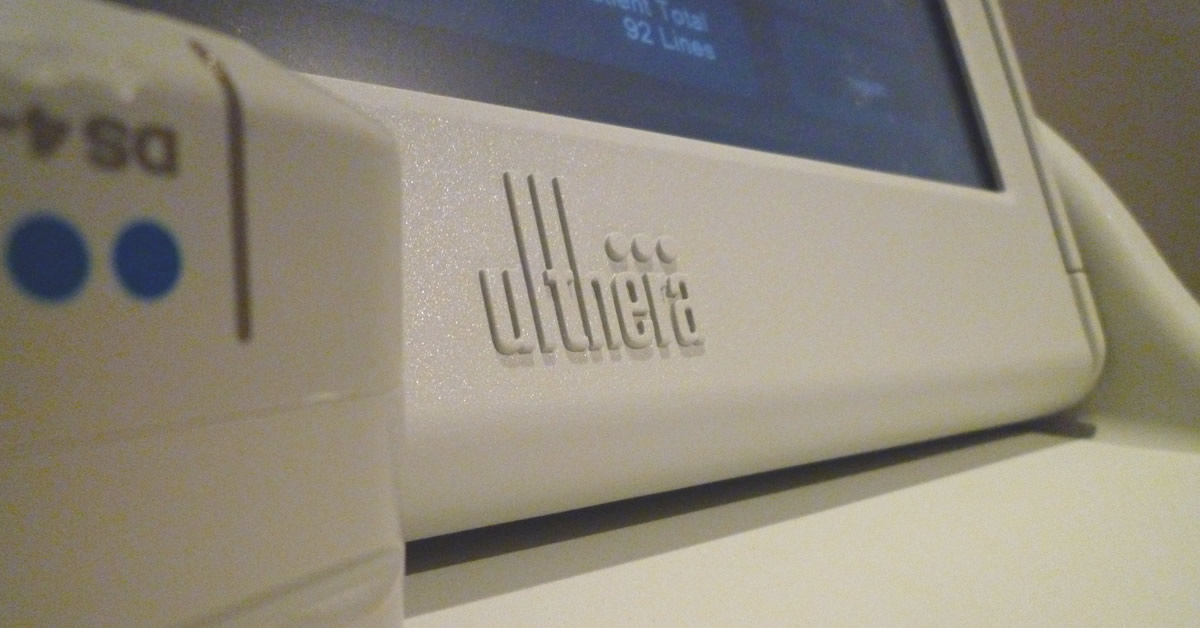
ultherapy_machine


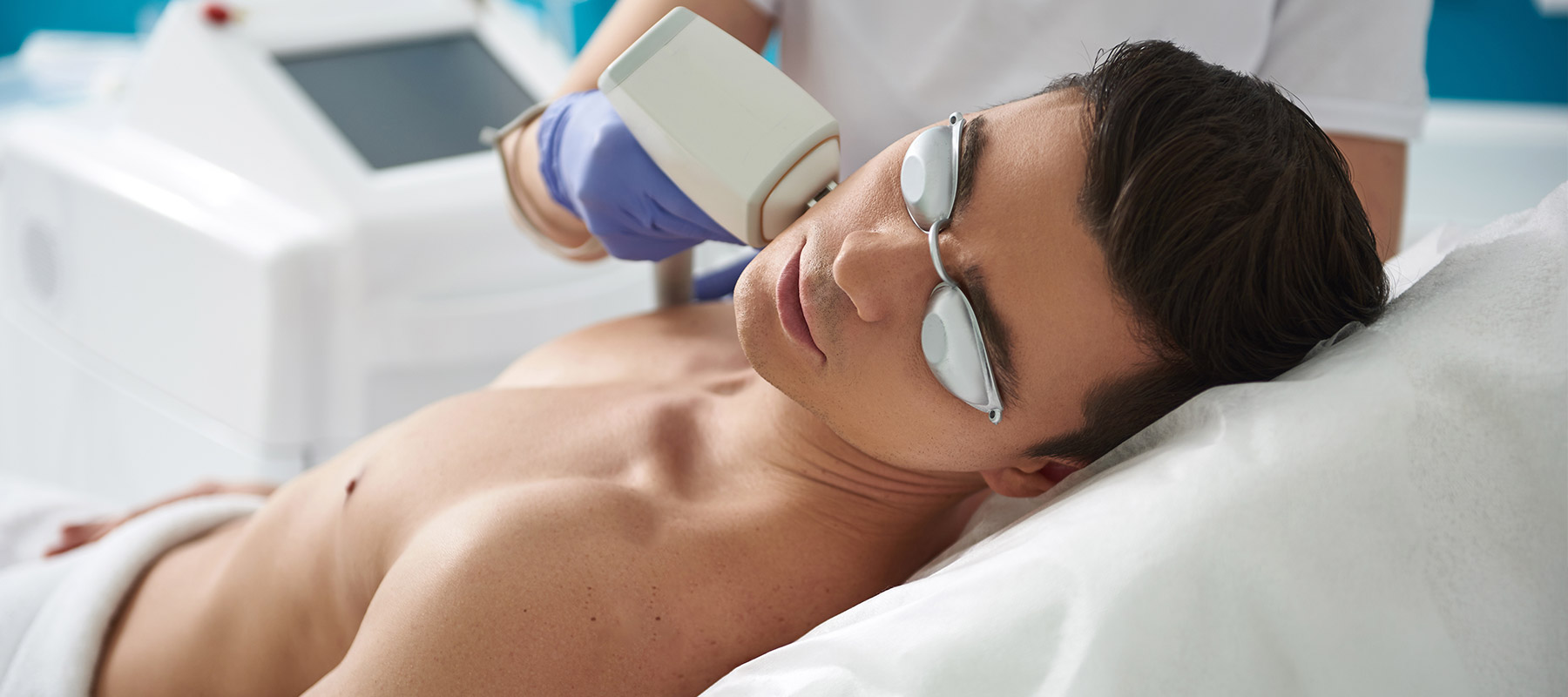
What really broke down the barrier to men fully embracing aesthetic treatments were the skin tightening treatments that started becoming popular around 2009-2010. Treatments like Ultherapy and Thermage mean “no-downtime”, and totally non-invasive skin tightening treatments. This went down very well with men.

In the past, cosmetic surgery used to be associated with bruises and bandages; extended healing time and exaggerated features post-surgery. Men absolutely hate having such procedures done. For one they cannot apply makeup to conceal any bruises, and secondly men hate taking time off work for such vanity-associated reasons.

With the newer methods and technologies, doctors are now getting reasonably good results with no recovery time at all. Hence more men are keener to do such procedures. Not only are they keener to do such procedures, they are also more keen to talk about their experiences with they spouses or their male buddies. This really re-defines aesthetic treatments for men, aka males aesthetics.

In fact, we have found that the “power of control” over one’s appearance that aesthetic treatments offer, goes down very well with the highly-driven male-corporate climbers’ psyche. Looking sharp is as much a prized commodity as being sharp-witted and sharp-minded.

You have to to admit it. Not only do they embrace aesthetic treatments, they will often travel the world looking for the latest technologies and the most skillful doctors.

And these highly driven, very successful individuals, usually have no qualms talking about “having work done” so long as the aesthetic treatments do not leave them with any recovery time. And as long as they do not have to put on makeup to conceal bruises, they would be most happy to share their experience about how they keep young and competitive.

That is in essence what male aesthetics has become – the “power of control” in our ever changing and highly competitive world.

Read more on the top 5 most popular aesthetic treatments among men. Ultherapy, Thermage, B*tox, Fillers, Skin Tightening Treatments,

Read more about Ultherapy vs Thermage vs Threadlifts

Read More
melasma

Melasma Treatment

Something new and exciting that i have to share about melasma treatment. A laser that effectively treats the most difficult kind of pigmentation, melasma. I know this might sound cliche, but it is a breakthrough as far a melasma treatment is concerned. Introducing the Dual Yellow Laser. It is not some new fangled toy. It has been in the market for a number of years, and it has clinical papers to prove its efficacy and safety.

Where lasers failed in the past was that that they were designed to fragment pigments under the skin. In doing so, we sometimes injure that skin, which leaves a mark (PIH) itself. Even if we don’t cause any injury, there is another underlying reason for melasma, the aggregation of tiny blood vessels, that is not treated. So along comes this Dual Yellow Laser that can address both these problems. Hence we have seen a dramatic improvement of outcomes in the treatment of melasma.

But of course that is not the whole story. Effective treatment of melasma should really start with sun-protection. One should also review underlying hormonal causes that can be modified. Like the use of oral contraceptive. Chemical peels like glycolic acid peels and retinoids, and de-pigmentation agents like hydroquinone, arbutin etc can also be used.

Laser should be used as a laser resort, after all the above have failed or the benefits have plateaued, to clear the more superficial pigments.

melasma
Blotchy pigmentation and telangiectasia are characteristics of melasma.
Read More
b*tox_cosmetic

How to Ensure Best Results with B*tox

Firstly, what is B*tox?

B*tox, and the various other brands of botulinum toxin are complex molecules that are derived from nature but synthesized in a laboratory. They work by blocking nerve receptors in muscles, sweat and oil glands. When skilfully administered to the target muscles, B*tox can be used to decrease wrinkles, reduce sweating and decrease oiliness in the skin.

What are the uses for B*tox?

Classically, B*tox is injected to erase lines on the forehead, between the eyes (the glabellar frown lines) and the crow’s feet. Less lines means less shadows across the face which looks neater and fresher. Or younger.

A novel use for B*tox would be to reduce the size of the jaw muscles. B*tox is injected into the biting muscles at the back of the jaw to cause the muscle to weaken and shrink. This then gives a slimmer and more triangularly shaped face.

B*tox can also be used to define a jawline and also to lift the skin of the neck.

And then there is Intradermal B*tox (previous also called Microb*tox or Mesob*tox). Multiple tiny injections of b*tox are placed within the skin to decrease the “opened-pores”. And btw, the intradermal b*tox also reduces sweating and oil secretions, which gives another level of refinement to the skin. Conditions like mild acne and rosacea responds well to this treatment.

B*tox is also quite often used in the treatment of hyperhidrosis. Injected into the skin of the armpit or the palms, it will reduce sweating for 6 months of more.

[nz_gap height=”25″ /]

Ok, how to get the best results?

The best results depend mostly on the aesthetic doctor’s skill and experience. Hence prices also differ greatly among doctors. This is a situation where you really get what you are willing to pay for.

For those who have only bad experiences with B*tox, you have only yourselves to blame. Because among all the available aesthetic treatments in the world, B*tox gives the most predictable results in trained and experienced hands. If the intention is to erase a line, and if it is technically feasible,  it will be successful in more than 90% of the time. No laser treatment comes close to this kind of results.

So why is it that sometimes there are no results? The results and duration of action (longevity) are dose-dependant. If an area needs 20 units of the product, but you are only willing to fork out money for 10 units (“just to try”, many patients will often say), then of course the results will be sub-optimal and it will not last.

Also, it is not wise to dictate that your doctor treats one set of muscles only. Adjacent muscles compensate and may give rise to unfavourable results – like the “Spock sign”. Always treat anatomical zones in totality.

The take home message, if you want the best results from your B*tox treatment, is to go to a trusted doctor and listen to her/him. Otherwise ask Dr Google to inject for you.

Should you go to unlicensed beauticians? As you would expect, skill and experience differ already among trained aesthetic doctors. What more with people who have not had medical training on hygiene and facial anatomy. We cannot stress more about this point.

Dr Phoon Yi Shan

Read More

Qualms no more about Cosmetic Surgery

If aesthetic treatments and cosmetic surgery are still taboo, it is because of the stereotypes still perpetuating in popular media. These stereotypes tend to portray aesthetic treatment or cosmetic surgery patients as being vain or narcissistic, or that they cannot reconcile with their bodies (a condition called body dysmorphia syndrome). And that cannot be further than the truth!

The vast majority of patients who come forward for aesthetic treatments and cosmetic surgery are actually highly motivated and very driven individuals. Their underlying motivation is about taking control over their appearance and hence their destiny. Whether it is to find a life partner or to look sharp for job and business prospects, aesthetic treatments and cosmetic surgeries give them a sense of empowerment over their own destiny. It is this sense of empowerment that defines the modern day patient for aesthetic treatments.

Modern day aesthetic treatments with little or no downtime fits fits right into this whole frame of mind. Where the individual takes control over his or her destiny, appearance and competitiveness.

And very often, they are so empowered they will travel the world to seek out the best treatments and best practitioners.

And these individuals usually have no qualms about admitting to having work done. So there you have it, the modern day aesthetic and cosmetic surgery patient.

Read More

Ultherapy V-Lift

[vc_row][vc_column][vc_column_text]The Ultherapy V-Lift is a non-invasive, non-surgical method to reduce the width of the lower and face. It sculpts the face while giving it a mild facelift-type effect.

Ultherapy is FDA approved since 2009 to lift a sagging face. It does this by tightening not only the skin, but the layers under the skin which we call the SMAS. This is a tough layer comprising muscles and the fibrous tissue. This is a strong supporting layer for the face.

Sound waves are focused by Ultherapy to leave tiny shockwaves under the skin and into the SMAS. Each point of these shockwaves triggers a cascade of collagen regeneration that translates into firmer and tighter skin. The results progressively improve over a period of several months.

What most patients experience is a mild facelift type effect that gets better as the months go by. All just after one treatment of Ultherapy.

It’s safety profile is unparalleled. In over a thousand cases done at David Loh Surgery since 2009, no one has suffered any form of injury from Ultherapy. Which sometimes happens with most other RF, IPL or laser treatments. The worst that can happen with Ultherapy is a mild mosquito-bite looking type of reaction in the skin, we call wheals. These will typically settle within a few days.

Ultherapy works particularly well in the lower face and under the chin. If fired deliberately into the fat fads in the jowl areas and under the chin, it can reduce these fat pads ever so slightly. Which is great because we can achieve a gentle sculpting of the face. These effects on the lower face we have term as The Ultherapy V-Lift.

The Ultherapy V-Lift is available at David Loh Surgery at both Novena Medical Centre and Wheelock Place. Our clinic is one of the first to start using Ulthera in 2009.

[/vc_column_text][vc_single_image image=”4424″ img_size=”full” add_caption=”yes”][vc_column_text]Read more:

Ultherapy, Facial Sculpting using Ulthera, Ultherapy page in Chinese, Ultherapy in Russian, Thread Lifts vs Ulthera[/vc_column_text][/vc_column][/vc_row]

Read More
Aesthetic Doctor

Dr David Loh teaching in various Asian countries

[nz_dropcap type=”empty full” color=””]I[/nz_dropcap]f he is not busy treating patients an his Wheelock Place clinic along Orchard Road, Dr David Loh travels to teach doctors throughout the region. In fact, Dr David Loh has trained a generation of doctors on the art of administering B*tox and facial fillers since 2006. Some of his trainees are now experts in the field themselves.

[nz_sep top=”20″ bottom=”20″ width=”” height=”” type=”solid” color=”#e0e0e0″ align=”left” /]

Back in 2006, he was appointed as one of the original trainers for the Restylane range of HA fillers. This was when Q-Med still owned the Restylane brand. And there was only Restylane and Perlane. Q-Med was the only serious filler manufacturer at that time. Of course in the years since, Q-Med was acquired by several parties and it is now owned by Galderma. And Allergan has since risen to also be a global player in the aesthetic field. It too was a target of mergers and acquisitions. Despite all the upheavals in the industry, Dr David Loh remained steadfast in honing his skills and techniques with some of the best in the industry from Australia, Brazil to France (You know who you are!).

[nz_sep top=”20″ bottom=”20″ width=”” height=”” type=”solid” color=”#e0e0e0″ align=”left” /]

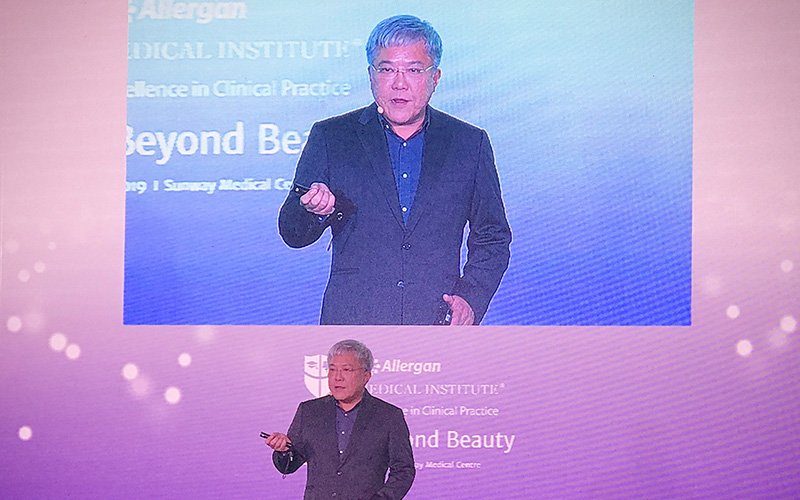
Dr David Loh has worked closely with Allergan since 2009, and is now a faculty member of the Allergan Academy. The Allergan Academy formalises B*tox and facial fillers training for doctors progressing from basic to advanced levels.

[nz_sep top=”20″ bottom=”20″ width=”” height=”” type=”solid” color=”#e0e0e0″ align=”left” /]

filler expert
Allergan Academy Training


Beyond the Allergan Academy, Dr David Loh also works closely with Galderma in China to impart his facial fillers injection techniques and artistry. He has lectured at the 1st People’s’ Army General Hospital’s plastic surgery conference in May 2014, and at a major national plastic surgery (3rd MIAPSD) conference in Shanghai in September 2014.

He works closely with hospitals in Changsha, Guangzhou, Shenzhen and Dongguan to elevate their standards of practice, at least where filler injections are concerned.

Registered to practice Medicine in The People’s Republic of China, Dr David Loh held regular visiting-expert sessions at a hospital in Shenzhen in 2013-2104. “Full face makeover with just Fillers” was his area of special interest, often drawing large crowds.

Besides China, Dr David Loh has also trained doctors in Jakarta and Bali in Indonesia on B*tox and Fillers. Dr David Loh lectured on micro-focused ultrasound at the SWAM conference in Jakarta in 2015.

[nz_sep top=”20″ bottom=”20″ width=”” height=”” type=”solid” color=”#e0e0e0″ align=”left” /]

Visiting Fillers Expert to Hospital in China
Expert Meeting in Shenzhen China
Facial Fillers Teaching at Hospital in Changsha China
Teaching at Hospital in Changsha China
Facial Fillers Lecture and Workshop at the 1st Army General Hospital in GuangZhou, China
Lecture and Workshop at the 1st Army General Hospital in Guangzhou, China
Lecture at 3rd MIAPSD in Shanghai
MIAPSD
3rd MIAPSD in Shanghai, China
Facial Fillers Workshop at BIMC Bali
Workshop at BIMC Bali
Facial Fillers Workshop at Rejuvie Clinic in Bali
Workshop at Rejuvie Clinic in Bali
Facial Fillers Workshop at ARC Bali
Workshop at ARC Bali
Workshop in Dongguan China
Facial Fillers Workshop in Dongguan China
Facial Fillers Workshop in Guangzhou, China
Workshop in Guangzhou, China
Read More
Thermage CPT

All you need to know about Thermage treatment.

Thermage is the pioneer of non-invasive skin tightening. It’s unique technology of monopolar capacitively coupled radiofrequency (RF) enables volumetric heating much deeper than lasers. It can penetrate the dermis and into subcutaneous tissues to firm up existing collagen and stimulate new growth. In addition to tightening, this deep penetration helps to slim down the silhouette, especially flab-prone areas like double chin, cheeks, tummy and arms. The top-down heating profile also addresses superficial skin problems like wrinkles and pores, improving skin texture. Unlike lasers, the superior heating technology of Thermage makes it a one-time procedure, lasting an amazing 2-3 years!

These days, there are so many skin tightening devices in the industry. I have tried many variants of bipolar radiofrequency, cavitation, infrared light… but none safely delivers the levels of energy as Thermage can. Clinical studies show up to 4 times more therapeutic heating by Thermage, compared to current technologies! In other words, Thermage still produces the most dramatic and lasting results.

The Thermage Journey

Since its launch in 1995, Thermage has withstood the test of time. Technology so often burns brightly, transiently, and then gets replaced by the next new upstart. (Just look at how I have to change a new iphone almost every year!) So what makes Thermage different?

Thermage is backed by strong research and development, continuously improving its safety and effectiveness. To be perfectly honest, I was never a huge fan of Thermage until the latest generation Thermage CPT (Comfort Pulse Technology) came along. This new platform incorporates vibration with cryogen bursts and pulses of RF, making it so much more comfortable. The tip design and software has also been upgraded to deliver more uniform heating. The new larger body tip contours almost anywhere in the body faster. All this translates into much better results, more uniform tightening, with virtually painless treatments.

Which Is Better? Thermage CPT Or Ulthera?

I get asked this very often. While both are giants in the industry, they work in different ways. Thermage treats the skin from top down using radiofrequency waves; while Ulthera rejuvenates the skin from inside out with focused ultrasound energy. Thermage CPT treats all the problems in the skin – texture, wrinkles, firmness; while Ulthera tightens even deeper layers like the SMAS to give a lift against gravity. As a matter of fact, the 2 treatments work synergistically. So do both (budget-allowing), for a 3-dimensional non-invasive facelift. At different times of course.

Thermage CPT is safe to perform alongside other energy-based devices like IPL and lasers, once the skin has settled. B*tox and Fillers are especially useful to further smoothen wrinkles and re-volumize hollowed areas, thus creating a more enhanced facelift.

When Should I Do This?

I often tell my patients not to wait until your skin has gone south before you start treatments. Anti-ageing procedures are best done preemptively, before skin loses all its collagen. That way, your youthfulness will be maintained. Once the skin sags and loses elasticity, it will be much more challenging to restore it to its former glory.

For more information on skin tightening and face lifting, contact Dr Phoon – phoonys@davidloh.sg or call us at +65 67339114

Dr Phoon and The Thermage CPT
Thermage CPT

Nuyou Jan 2014


Read More
Facial Sculptor

Sculptor without Scalpel – Dr David Loh using Facial Fillers

facial fillers singapore
The article was written circa June 2013. And reported in Herworld.
Since then, Dr David Loh has gained multiple international awards for his work on safety and innovative techniques

[nz_gap height=”25″ /]

Doctors welding syringes of facial fillers instead of scalpels have changed the entire landscape of aesthetic treatments. Firstly, they are not just wrinkle chasers anymore. With highly evolved perspectives of what constitutes beauty, they are injecting fillers into areas hitherto unimaginable and sculpting and contouring faces in ways previously unheard of. And secondly, using only facial fillers, they are transforming faces into spectacular works of art! These are the sculptors without scalpels.

If you thought during your visit to the aesthetic doctor, he will simply inject some fillers into your nasolabial folds (the folds beside your nose), then you are quite mistaken. That’s almost an extinct method. Facial fillers are now used to prop up skin in surrounding areas to stretch out the naso-labial folds – all without ever injecting into the fold itself.

With facial fillers, you can expect to come out of the doctor’s office not only looking younger and fresher, but a more beautiful and more stunning version of yourself.  There’s nowhere that fillers cannot be injected. The forehead, around the eyes, the nose, the cheeks, the chin and even lips can be made to look more prominent or de-emphasized, as may be needed – all just with fillers.

“Evolved into art form, facial filler techniques are used to sculpt and contour faces to enhance beauty in already beautiful faces. Beyond just chasing wrinkles, facial fillers more importantly restore proportions, balance and symmetry.”

Faces that are flat can be made to appear shapelier; faces that are broad appear slimmer; or faces that are angular to appear softer. Small chins can be made more prominent; and flat noses more projected. And the list goes on.

And where fillers were once a dull and boring cousin of B*tox, it now takes center-stage as the most impressive and the most instantly gratifying aspect of any encounter with aesthetic doctors.  Not surprisingly, it has had a major revival in popularity in the last 5 years.

Previously taboo subjects about cosmetic surgeries suddenly became cool, hip, and something to talk about over dinners and at parties. While “no-recovery time” is de rigueur, facial sculpting and contouring with fillers is now the cutting-edged frontier.

“The way for aesthetic doctors to stand out from the crowd is to have a good foundation in injection techniques and to hone one’s skills into an art form. Today, aesthetic doctors are sculpting faces and shaping skin in such a way that lines stretch out even without a single drop of filler material injected into the line itself. In the future” Dr David Loh, who is the trainer for B*tox and fillers, added, “we will probably be looking at how to predict the effects of aging and using fillers to prevent it altogether. Already, studies have shown that fillers alone can stimulate the production of collagen just by their stretching the skin.”

Dr David Loh is the Allergan appointed trainer for B*tox and Fillers since 2006. He has trained more than 150 doctors in the region and was recently in Jakarta and Bali to train the future trainers for Indonesia. He also trains and consult for doctors in Guangzhou, Shenzhen and Shanghai, China. In China, he works with the Restylane range of Facial Fillers.

He owns a chain of aesthetic clinics along Orchard Road in Singapore. And he is the President of The Society of Aesthetic Medicine in Singapore.

Read More
Expert's opinion on Filler Techniques

How Hyalase changed the practice of Filler Injections

Tear Trough Correction with Fillers
Tear Trough Filler Injections.

In the age before Hyalase (or more accurately Hyaluronidase) became easily available, over injection of fillers was a nightmare most aesthetic doctors had to deal with pretty regularly. Luckily the fillers of that age didn’t last so long and most doctors weren’t so adventurous, sticking mostly to the nasolabial folds.

In that era (circa 2002-2005), some of us had to resort to using lasers and IPLs to dissolve the fillers, which of course didn’t work. We now know better and have stopped advocating lasers to “dissolve” fillers”. But the lesson learnt allows us to confidently use skin tightening devices like Ulthera together with fillers without the fear of destroying the fillers.

Now with hyaluronidase available, however, we can infinitely adjust fillers as long as they are made of hyaluronic acid. Too much and we will dissolve some of it away. Too little, we can inject some more. This gives us us accuracy and precision to venture into more hallowed areas like the tear trough and the marionette lines.

The hyaluronidase instantly dissolves the fillers in situ. It breaks Hyaluronic acid down into simple sugars that can easily be absorbed into the bloodstream or the lymphatic system. After several days when the hyaluronidase has been reabsorbed and any swelling has subsided, we can do the corrective adjustments for the areas as some of the surrounding will also be inevitably be affected.

Hyalase gave us the ability to infinitely adjust any filler treatments, gave us rise to the art of facial sculpting with fillers which we have termed the Liquid Facelift.


Photo Credit: Galderma Restylane

Read More